Manufactured Home Permitting Process in North Carolina
If you’re flipping or building manufactured homes in North Carolina, one of the biggest places deals get delayed—or killed—is the permitting process.
It’s not complicated once you understand the sequence, but it is very specific. Missing one step or misunderstanding local requirements can cost you weeks (or months).
Here’s a clear, investor-friendly breakdown of how the process works in most North Carolina counties.
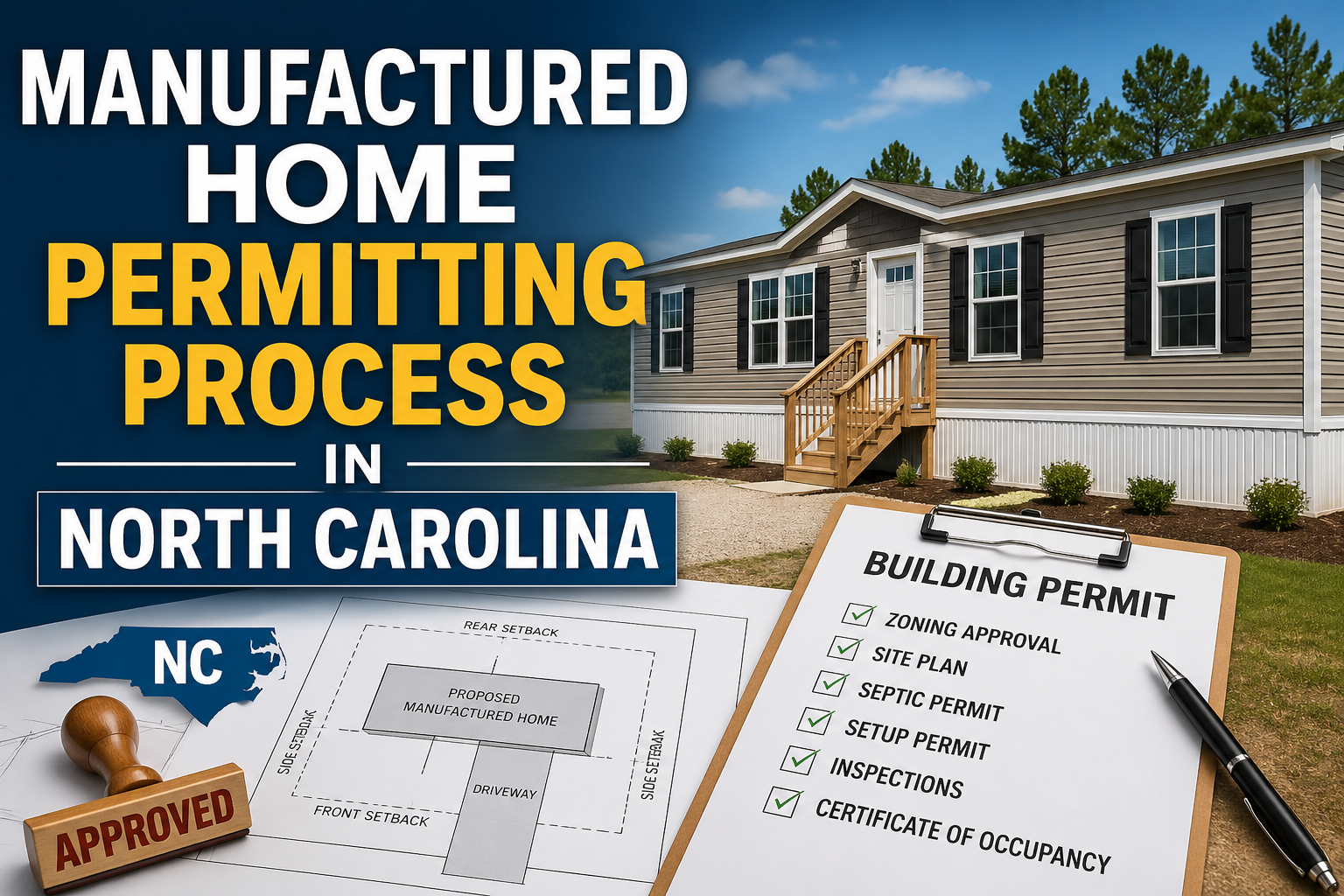
Step 1: Zoning Approval (Start Here Every Time)
Before you buy a lot—or definitely before you move a home—you need to confirm:
- Is a manufactured home allowed on this parcel?
- What type (single-wide vs double-wide)?
- Minimum lot size and frontage requirements
- Any overlay restrictions (flood zones, watershed, etc.)
In many NC counties:
- Double-wides are commonly allowed by right in rural/ag zones
- Single-wides may be restricted or require special approval
👉 Investor takeaway:
Never assume a lot is buildable just because there are other mobile homes nearby. Zoning changes parcel by parcel.
Step 2: Site Plan / Plot Plan
Once zoning is confirmed, you’ll need a basic site plan showing:
- Home location
- Setbacks (front, side, rear)
- Driveway access
- Well/septic (or water/sewer connections)
This doesn’t need to be overly complicated, but it must meet county standards.
👉 This is where many deals slow down—especially if setbacks or lot shape are tight.
Step 3: Septic Permit or Utility Verification
If the lot is not on public sewer:
- You’ll need a septic evaluation and permit
- Soil testing determines system type and cost
If utilities are available:
- Confirm tap availability and fees
- Verify capacity (especially in rural systems)
👉 Reality check:
Septic issues are one of the top deal killers in rural NC. Always verify early.
Step 4: Zoning Permit Issued
After zoning + site plan + septic/utilities are approved, the county issues a:
Zoning Permit (or Land Use Permit)
This officially allows you to proceed with the project.
Step 5: Setup Permit (Manufactured Home Permit)
This is specific to manufactured homes and typically requires:
- HUD data plate verification (critical for flips)
- Pier/foundation plan
- Tie-down/anchoring system
- Installer details
👉 If you’re flipping homes:
Missing HUD plates or improper setup can delay or prevent approval.
Step 6: Move-In and Installation
Once permits are in place:
- Home is delivered to the site
- Set on piers or foundation
- Anchored and stabilized
- Utilities connected
Step 7: Inspections
Counties will inspect key components:
- Foundation / piers
- Tie-down system
- Electrical connections
- Plumbing/septic hookup
- HVAC (if applicable)
Expect multiple inspections depending on the county.
Step 8: Certificate of Occupancy (CO)
Final step:
Once everything passes inspection, the county issues a Certificate of Occupancy (CO).
This means:
- The home is legally livable
- You can sell it retail
- Lenders and buyers can move forward
How This Impacts Investors
For Flippers
- Timeline delays = holding cost risk
- Missing HUD plate or title issues = deal risk
- Permits still apply even if the home was previously installed
For Spec Builders
- Permitting drives your entire project timeline
- Septic + site work = biggest variable costs
- Clean process = faster turn and resale
Common Mistakes to Avoid
- Buying land without confirming zoning
- Assuming septic will work
- Not verifying HUD plate/data plate
- Underestimating permitting timelines
- Ignoring local county differences
Key Insight: Every County Is Slightly Different
North Carolina does not have a single statewide process.
Each county (like Harnett County, Johnston County, or Lee County) has:
- Its own zoning rules
- Its own inspection timelines
- Its own interpretation of state guidelines
👉 Smart investors learn their target counties deeply instead of trying to operate everywhere at once.
Final Thought
If you’re serious about manufactured home investing in North Carolina, mastering the permitting process is a competitive advantage.
Most new investors:
- Skip steps
- Make assumptions
- Learn the hard way
If you stay disciplined and follow the process, you’ll move faster—and with fewer surprises—than most of your competition.