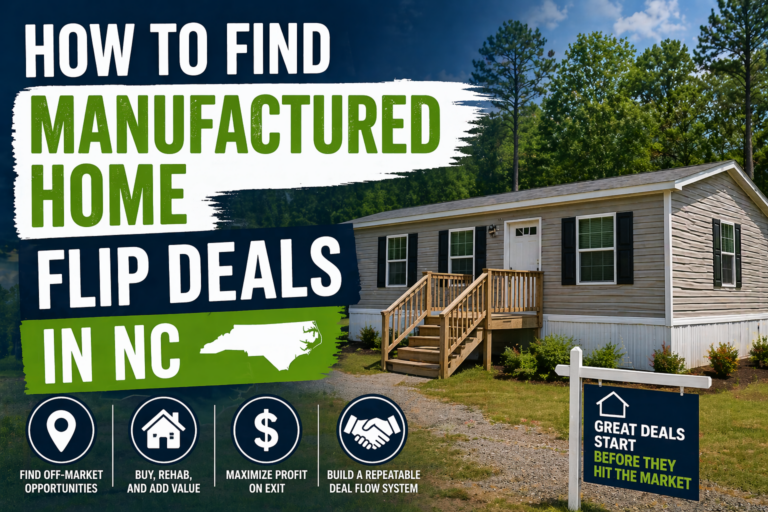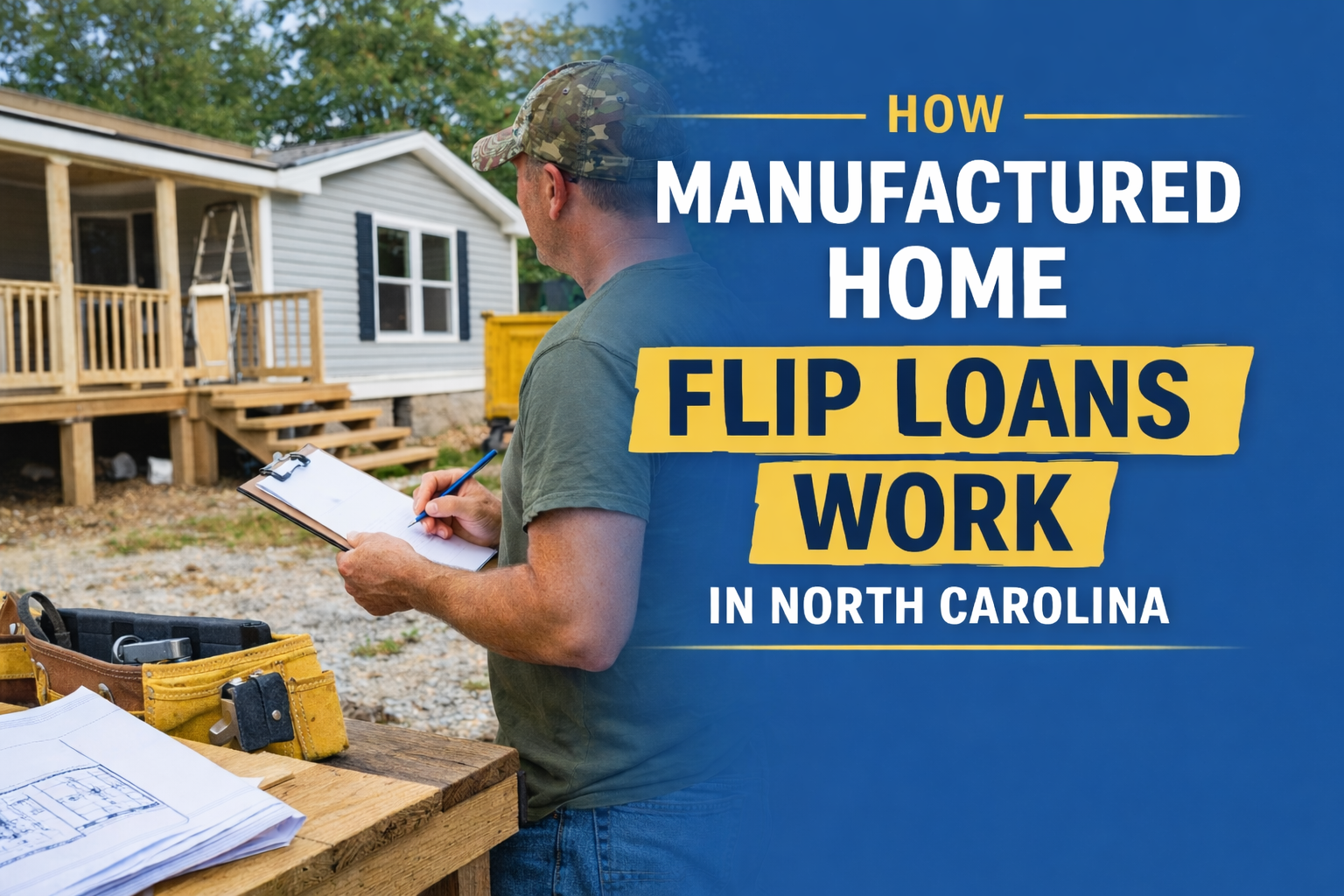
How Manufactured Home Flip Loans Work in North Carolina
Manufactured home investing has become one of the most overlooked opportunities in North Carolina real estate. While many investors focus on single-family houses, manufactured homes often offer lower entry prices, less competition, and strong demand from affordable housing buyers.
However, financing these projects can be difficult. Many traditional lenders avoid manufactured housing, especially for investment properties or short-term projects.
This is where private lending fills the gap.
What is a manufactured home flip loan?
A manufactured home flip loan is a short-term loan designed to help investors:
- Purchase a manufactured home
- Complete repairs or improvements
- Resell the property for profit
These loans are typically used for projects lasting between 3 and 12 months.
Unlike conventional mortgages, flip loans focus more on the strength of the deal than on long borrower histories.
How private lending differs from traditional financing
Traditional banks often require:
- Long approval timelines
- Extensive income verification
- Owner-occupant requirements
- Restrictions on manufactured housing
Private lending is structured differently.
Instead of focusing primarily on borrower income, private lenders typically evaluate:
- Deal quality
- Purchase price vs value
- Repair budget
- Exit strategy
- Investor experience
Speed and flexibility are usually the main advantages.
What types of deals typically qualify?
Strong manufactured home investment deals often include:
- Homes permanently affixed to land
- Clear title or converted to real property
- Purchase prices well below resale value
- Reasonable repair scope
- Clear resale demand
Deals that tend to struggle to qualify include:
- Homes with unclear title issues
- Homes not attached to land
- Heavy structural repairs
- Unrealistic resale projections
- Very thin profit margins
Typical loan structure
While every deal is different, many manufactured home flip loans include:
- Short term duration
- Interest-only or deferred payments
- Funding based on deal strength
- Investor skin in the game
- Clear exit plan
Private lending is designed to support professional investors operating a repeatable model—not speculative or poorly planned projects.
What experienced investors understand
Successful manufactured home investors usually focus on:
- Buying at the right price
- Conservative rehab estimates
- Understanding infrastructure costs
- Knowing local resale demand
- Having multiple exit options
In many cases, the difference between a profitable project and a loss comes down to discipline during acquisition.
Common mistakes new investors make
Some of the most common problems seen in manufactured home investments include:
- Overpaying at purchase
- Underestimating repairs
- Ignoring septic or utility costs
- Not verifying title status
- Assuming retail financing will be easy for the end buyer
Careful due diligence upfront usually prevents these issues.
Preparing to apply for funding
Investors seeking funding should be prepared to provide:
- Purchase contract
- Property details
- Rehab scope and budget
- Estimated resale value
- Timeline
- Experience summary (if applicable)
Organized deal submissions tend to receive faster review.
Final thoughts
Manufactured home investing can be a strong niche for disciplined investors who understand their numbers and operate with realistic expectations.
Private lending works best when both lender and investor are aligned around one goal:
Funding solid deals with clear paths to successful exits.
If you are actively investing in manufactured homes in North Carolina and would like to discuss financing, you can learn more about our loan programs or submit a deal for review.