
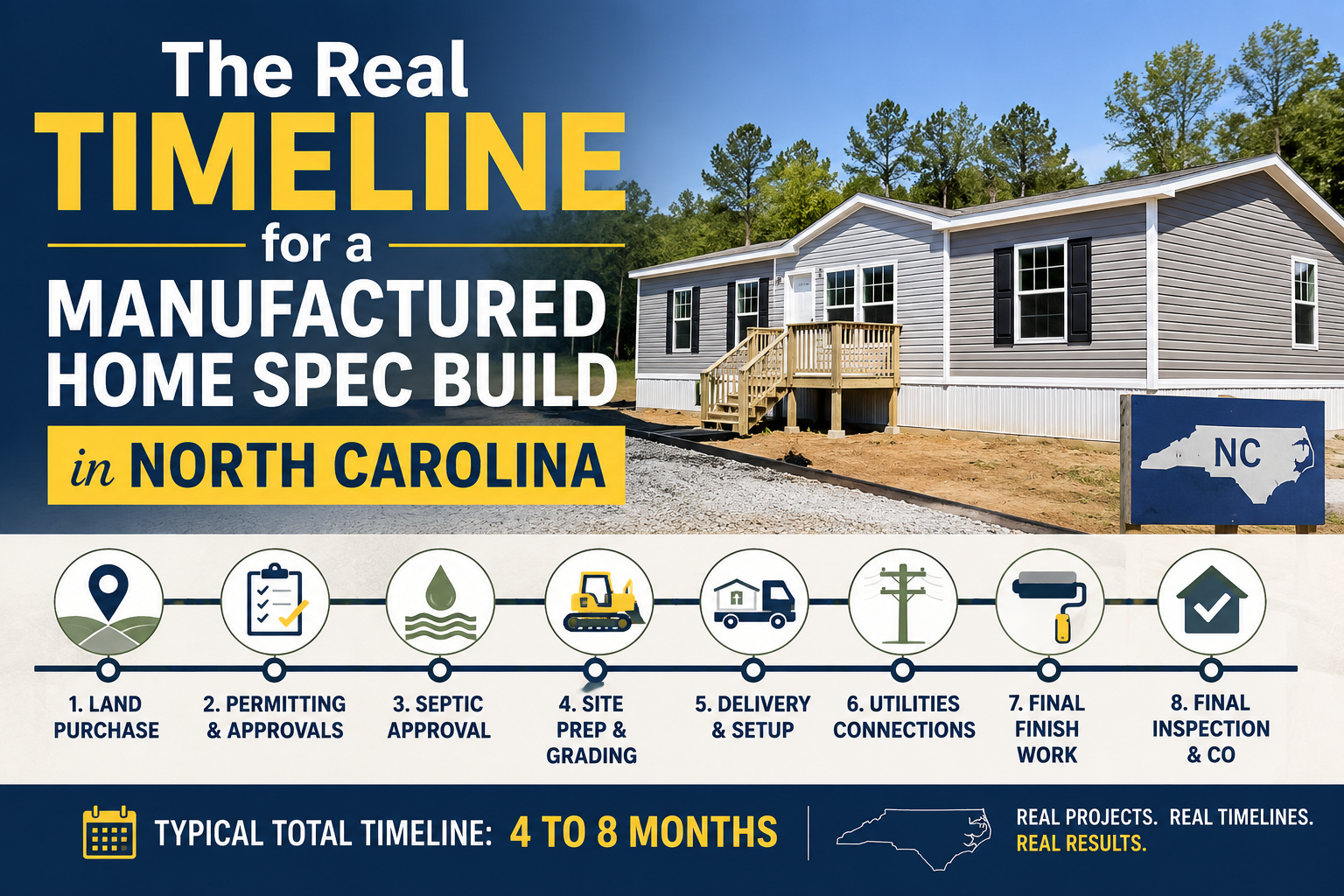
The Real Timeline for a Manufactured Home Spec Build in North Carolina
Why most new investors underestimate how long a manufactured home project actually takes.
One of the biggest mistakes new manufactured home investors make isn’t paying too much for a lot or underestimating construction costs.
It’s underestimating time.
Many first-time builders assume they can buy a lot, place a manufactured home, and have it ready to sell in 60 or 90 days. In reality, every project involves multiple moving parts, county approvals, contractors, utility companies, inspections, and weather delays.
While every project is different, understanding the typical timeline will help you plan your financing, set realistic expectations, and avoid costly surprises.
Step 1: Find and Purchase the Lot
Typical Time: 1–4 weeks
Everything begins with the right lot.
Before closing, you should confirm that the property can actually support the type of home you plan to build.
Some important items include:
- Zoning allows a manufactured home
- Road frontage and legal access
- Buildable area
- Floodplain status
- Utility availability
- Septic suitability
- Water source
A cheap lot isn’t a bargain if it can’t be built on.
Step 2: Permitting and Site Evaluation
Typical Time: 2–6 weeks
This is often where projects slow down.
Depending on the county, you may need:
- Zoning approval
- Building permit
- Manufactured home permit
- Driveway permit
- Environmental Health review
- Septic permit
- Well permit (if applicable)
Every county works a little differently, and permit turnaround times vary throughout the year.
Step 3: Septic Approval
Typical Time: 2–8 weeks
In much of rural North Carolina, a septic permit is one of the biggest milestones.
If the property has never been evaluated, the county will typically require:
- Soil evaluation
- Site visit
- Septic design
- Permit issuance
If the soils are challenging, additional engineering may be required.
This is one reason experienced builders often secure septic approval before purchasing a lot whenever possible.
Step 4: Site Preparation and Grading
Typical Time: 1–3 weeks
Once permits are issued, the lot has to be prepared.
Typical work includes:
- Clearing
- Grading
- Driveway installation
- Foundation preparation
- Drainage improvements
- Utility trenches
Weather can significantly affect this stage. Heavy rain may delay grading for days or even weeks.
Step 5: Order, Deliver, and Set the Home
Typical Time: 2–8 weeks
Many people think this is the longest part of the project.
Often it isn’t.
Once the home is available, delivery and setup generally move fairly quickly.
This stage includes:
- Home delivery
- Crane or set crew
- Marriage line completion
- Foundation installation
- Tie-downs
- Initial inspections
Factory production schedules and dealer inventory can affect timing, so ordering the home early is important.
Step 6: Utilities
Typical Time: 2–6 weeks
Connecting utilities often takes longer than investors expect.
This may include:
- Well installation
- Water connection
- Septic installation
- Electrical service
- Power company meter
- Internet availability
Utility companies operate on their own schedules, so coordinating these trades early helps prevent delays.
Step 7: Final Finish Work
Typical Time: 1–3 weeks
With the home installed and utilities connected, contractors complete the remaining items.
These often include:
- Steps and landings
- Skirting
- HVAC startup
- Final grading
- Landscaping
- Interior touch-ups
- Cleaning
Small punch-list items are normal before the final inspection.
Step 8: Final Inspection and Certificate of Occupancy
Typical Time: 1–2 weeks
The final step is obtaining the Certificate of Occupancy (CO).
After the county completes its final inspections, you’ll receive approval for the home to be occupied and sold.
Only then is the project truly complete.
A Typical Timeline
While every county and project is different, a reasonably planned manufactured home spec build often looks something like this:
| Stage | Typical Time |
|---|---|
| Lot Purchase | 1–4 weeks |
| Permits | 2–6 weeks |
| Septic Approval | 2–8 weeks |
| Site Preparation | 1–3 weeks |
| Home Delivery & Setup | 2–8 weeks |
| Utilities | 2–6 weeks |
| Finish Work | 1–3 weeks |
| Final CO | 1–2 weeks |
For many projects, the total timeline is approximately 4 to 8 months from lot purchase to Certificate of Occupancy.
Well-organized builders with experienced teams may complete projects more quickly, while weather, permitting delays, or utility scheduling can extend the timeline.
Why This Matters to Investors
Understanding the timeline helps you:
- Budget carrying costs accurately
- Choose realistic loan terms
- Coordinate contractors efficiently
- Set better expectations with buyers
- Avoid unnecessary stress
The fastest projects aren’t always the most profitable. Experienced builders know that careful planning usually saves more time than rushing from one stage to the next.
Financing Your Next Manufactured Home Build
At Mobile Home Money, we finance manufactured home spec builds throughout North Carolina for experienced real estate investors and builders.
If you’re planning your next project, we’d be happy to discuss your financing options and help you structure a loan that matches your project’s timeline.